Licensed and Insured | Claim Your 10% Veteran Discount
Flashing Repair in Hudson, WI: Fixing Where Most Roof Leaks Actually Start
Chimney, vent, or skylight leaking even though your shingles look fine? The problem is probably the flashing, not the roofing material around it. We repair flashing across Hudson and the surrounding area.
← Back to Roof Repair Services
When You Need Flashing Repair
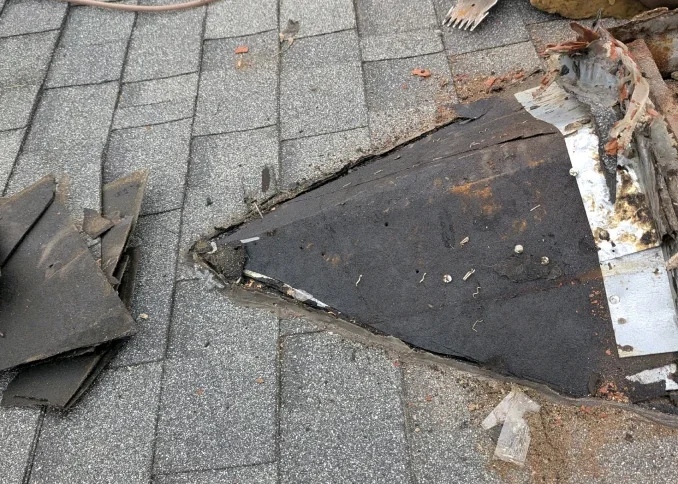
Look for leaks near a chimney, vent pipe, skylight, or anywhere two roof planes or a roof and wall meet. Cracked caulk, rusted or lifted metal, and gaps where flashing has pulled away from the surface are all warning signs. Flashing moves and expands with temperature changes and eventually fails even on a roof that’s otherwise in good shape, so a leak here doesn’t necessarily mean your whole roof is failing. Left unaddressed, it lets water into the wall cavity or attic, often invisibly until real damage has already occurred.
Our Flashing Repair Process
We inspect every flashing point on the roof, not just the one you called about, since a failure in one spot often means others are close behind. We remove the damaged or failed flashing, correct the underlying surface if needed, and install new flashing sealed and fastened properly for the specific junction, whether that’s a chimney, valley, vent, or roof-to-wall transition. We check the work holds a proper seal before we finish.
Flashing Repair Cost in Hudson
Cost depends on how many flashing points need attention and how accessible they are. A single vent boot is a smaller job than a full chimney flashing rebuild. We provide a free written estimate after inspecting the roof so you know the scope before we start.
Why Choose Us
We bring over 25 years of experience diagnosing and repairing flashing failures, which is often the actual source of a leak that looks like a shingle problem. We’re available 24/7 for active leaks, and we check every flashing point on the roof as part of the visit, not just the one that’s currently leaking.

Flashing problems rarely announce themselves until there’s water damage.
Call (715) 222-0037 for a full flashing inspection.
Frequently Asked Questions
Why does flashing fail even when the shingles around it look fine?
Flashing is metal and sealant that moves with temperature swings and takes on stress at every joint it covers, so it tends to fail before the shingles do. Corrosion, dried out caulk, and shifting from freeze-thaw cycles are the most common causes we see.
Is flashing really the most common source of roof leaks?
Yes. Flashing failures at chimneys, vents, skylights, and wall junctions are consistently cited by roofing industry sources as one of the leading causes of roof leaks, more often than the shingle field itself. That’s why an inspection focused only on shingles can miss the actual problem.
Can flashing be repaired without replacing shingles around it?
In most cases, yes. Flashing repair typically involves removing and resetting the flashing itself along with a limited number of shingles directly around it, not the whole roof section. We’ll walk you through exactly what needs to come up during the repair.
Do you check all the flashing points, or just the one that’s leaking?
We check every flashing point on the roof during a repair visit, since a failure in one spot often means nearby flashing is close to failing too. According to the National Roofing Contractors Association, a thorough biannual inspection is meant to catch developing problems, not just the one that’s already visible.
Can flashing be repaired in cold weather?
It depends on the temperature and the type of repair. Sealant application in very cold conditions can be limited, and lifting shingles to replace flashing underneath isn’t always advisable below certain temperatures. We’ll assess the conditions and let you know the safest and most effective approach for your situation.